

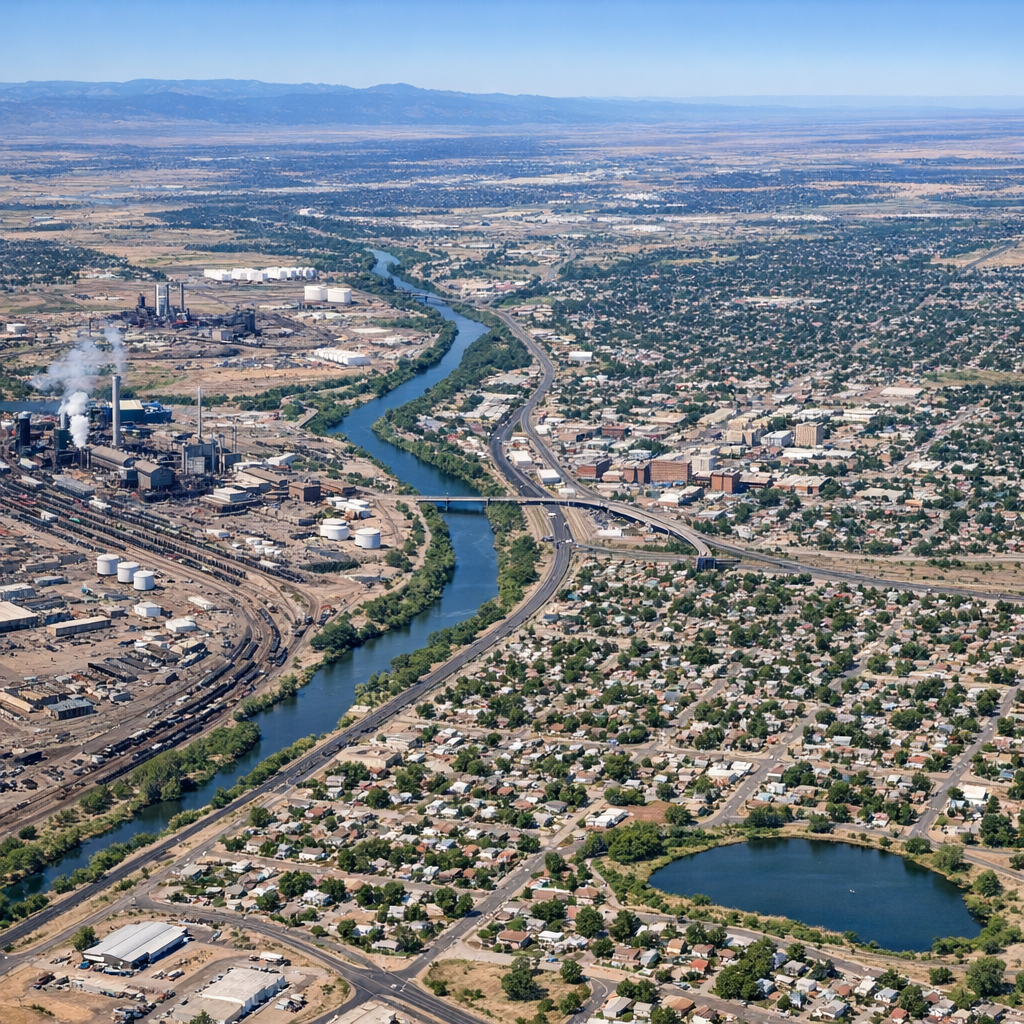
Pueblo, Colorado, has a rich industrial history that has significantly shaped its environmental landscape. The legacy of steel production and smelting operations has left enduring challenges for the community, particularly concerning pollution and public health.
Industrial Pollution and Superfund Sites
The former Colorado Smelter, operational from 1883 to 1908, processed various ores, releasing heavy metals like lead and arsenic into the environment. This contamination led to the designation of the area as a Superfund site by the Environmental Protection Agency (EPA) in 2014. Cleanup efforts have been ongoing, focusing on removing contaminated soil from residential properties to mitigate health risks. The EPA has been actively involved in these remediation activities, aiming to restore the affected neighborhoods.
Similarly, the Colorado Fuel and Iron (CF&I) steel mill, which operated from 1881 to 2000, contributed to significant environmental contamination. The site spans hundreds of acres along the Arkansas River, with pollutants including heavy metals and petroleum products. These contaminants have impacted soil and groundwater quality, posing challenges for environmental restoration efforts.
Water Quality Concerns
Pueblo’s water quality has been influenced by industrial activities and natural factors. The Arkansas River, a vital water source for the city, has faced contamination issues due to historical industrial discharges. Additionally, the city’s wastewater treatment system has struggled with elevated levels of selenium and sulfate, which can affect aquatic life and water taste. Addressing these issues requires significant investment in infrastructure and ongoing monitoring to ensure safe water for residents.
Housing and Environmental Justice
The Historic Eastside Neighborhood, developed between 1880 and 1940, exemplifies the intersection of environmental and housing challenges. This area, physically separated by Fountain Creek, has experienced economic decline since the 1980s. Many historic homes are in poor condition, and the neighborhood lacks public amenities found in wealthier parts of Pueblo. Efforts to revitalize the area are crucial to address both environmental justice and housing quality concerns.
Furthermore, the city’s housing stock is aging, with many homes built before 1980. Deteriorating housing conditions, coupled with environmental contamination, exacerbate health risks for residents. Strategic planning and investment are necessary to improve housing quality and ensure safe living environments.
Community Initiatives and Future Outlook
Community organizations and local authorities are actively working to address these environmental challenges. The Colorado Smelter Revitalization Project aims to clean up contaminated sites and revitalize affected neighborhoods. Additionally, the city’s Consolidated Plan outlines strategies to improve housing conditions and address environmental concerns.
While Pueblo faces significant environmental challenges, the community’s resilience and proactive initiatives offer hope for a healthier and more sustainable future. Continued collaboration between residents, local government, and environmental agencies is essential to overcome these issues and enhance the quality of life for all Puebloans.